


To understand the issue a little more:
Most commercially prepared processed dog foods are not safe/nutritionally ideal for felines to eat long-term. This is because these foods (developed to serve the needs of the food industry, and not the nutritional needs of carnivores) are going to be, most notably:
- too low in bio-available/usable protein; cats have a higher need for high quality animal protein; the fresher, the better, with proper sourcing & handling being even more important for felines
- too low in fat (as much as 60% of the calories in a cat’s diet may come from fat); also, the quality of fats found in these foods are a problem when relying on plant sources fats; all fats, even healthy omega-rich animal-sources of fats, are fragile and susceptible to rancidity; most are pro-inflammatory and cancer-causing when heated. When not from ideal, species appropriate sources, fat can be very damaging for their health over time, rather than a healthful and sustainable required source of nutrients and necessary metabolism of essential nutrients
- too high in produce or other non-animal derived fillers/starches/carbohydrates and contains ingredients that are not appropriate for obligate carnivores (felines are strict carnivores by design; for example, cats lack the enzyme glucokinase, which is needed to digest carbohydrate)
- do not contain necessary dietary, animal sources of “preformed” vitamin A and carotenes, arachidonic acid/beneficial required fats, B-vitamins (niacin and pyridoxine), or the essential amino acid l-taurine and arginine for cats
Commercially prepared processed dog food may also not have the proper mineral balance required for cats. For example, felines have a very low/narrow calcium to phosphorous ratio (1:1 to 1.3:1) compared to what is safe and healthy for canines (minimum 1:1, but ideal can range up to 2:1).
Considerations of feeding SFRAW Grinds & Formulas to felines
Our Grinds & Formulas, by contrast, are made of raw, truly pasture-raised, nutrient-dense whole animals. We use only whole, USDA facility processed and passed by USDA inspection to be “fit for human consumption” animals and cuts of meat/poultry; we include all the meat/bone/organs as provided in the whole animal.
We will not, and have never used carbohydrates, starches or large quantities of low-quality or non-certified organic vegetable matter, as is the case with processed kibble, some canned foods, many dehydrated foods and even commercially available prepared raw foods!


The nutritional profile and safety of any ingredient or food is dramatically influenced by many factors, including:
- how animals are being raised for food: lifestyle stress factors, medications used during their lifetime, exposure to toxins, heavy metals and poisons make huge differences in the quality, safety and nutrition of the meat/dairy/eggs produced by them;
- adequate and free time spent outdoors provides healthy exposure to nature/soil/forage/food and beneficial bacteria; allowing these animals to live in peace according to the unique, natural habits of their species, and being able to express natural behaviors all influence the nutritional profile of the food they produce as well as the safety of this food. (Of course, raising animals in a manner that truly honors and preserves the specific needs and natural habits of their species is a more humane method of ranching, too!)
- the quality, nutrient density, bio-availability and integrity of food that is provided to these animals being raised for meat/poultry/dairy/eggs, and the freshness, cleanliness, purity, wholesomeness and nutrient density of this food really matters!
- For example, meat/poultry/dairy and eggs sourced from truly pasture-ra

- For example, meat/poultry/dairy and eggs sourced from truly pasture-ra

Handling & processing influence nutrient density
Raw food is more nutritious when consumed and minimally prepared in as fresh, raw and whole food form as possible, and when not heat processed.
The huge amount of carbohydrates and starches present in many commercially available pet foods are a source of sugar, which is damaging for MANY reasons. These foods also contain anti-nutrients such as phytates and lectins that inhibit absorption/bio-availability of important minerals and vitamins (new information indicates that anti-nutrient factors may be the cause of serious cardiac issues dogs eating “grain-free” kibbled foods are showing due to a lack of taurine — a tremendously vital and essential amino-acid for cats); and this is especially true and relevant for our carnivore friends.
Processed pet foods add a (really risky/possibly harmful!) “vitamin mineral pack” to address deficiencies and imbalances caused by including problematic ingredients (simply compounding and increasing problems!) Supplementation is used to address the problems associated with processed foods and using ingredients that are not species appropriate or necessary for your animals’ nutritional requirements in any way.
Please understand that low-quality non-animal “filler” ingredients and associated/required “vitamin mineral packs” are used in pet foods primarily to serve the needs of the food industry. They are not (and never were!) included in pet foods to serve the actual nutritional needs of your carnivorous dogs or cats.


Our Grinds are simply the entire animal, ground up. Nothing else is added. The entire animal provides everything your carnivore needs as a foundation for providing them with the most ideal, species appropriate nutrition by nature’s design without other ingredients which may harm them/not serve them well or that they may be allergic or intolerant to. Unlike other raw food manufacturers, we don’t rely on inexpensive parts and pieces to make our foods, but purchase the more expensive, yet more balanced and healthful/nutritious, entire animal – including the meat, skin, connective tissue, bones and offal. When we can, we also include the heads & feet (chicken & duck); and green tripe (lamb). So, SFRAW Chicken Grind is simply 100% ground whole wild chickens with the heads, feet & offal. No water is added during processing. We grind a single pass-through, with a medium plate, this ensures that the integrity and nutrition provided by the whole food being used is preserved as much as possible.


So, yes, you can feed kitty our Formulas, but the primary issue may actually be whether your cat loves to eat the Formulas or would prefer/better enjoy our Grinds instead.
Long term, responsible feeding of SFRAW Grinds
Our Grinds are simple elegance and provide just what a carnivore needs, by nature. 100% whole animals are used for our Grinds – including the bones/skin/offal/heads & feet (whole ducks, rabbits, chicken, turkeys, pheasants, geese); and we combine prey model 80/10/10 ratios of incredible, high quality primal cuts of lamb, beef & pork. We use high quality muscle meat, not inexpensive parts & pieces as the foundation for our grinds — and then add heart, tongue, liver, kidney & spleen + a source of adequate calcium. The Grinds are suitable to feed “as is”, although we suggest adding a few things for ideal long-term success:
- Supplemental or additional source of taurine. SFRAW recommends supplementing DIY meals and SFRAW Grinds with added sources of taurine as an insurance policy for your cat’s long-term health. You may choose, and we often recommend, supplementing our foods with additional fresh, whole heart or another taurine rich food a few times a week, and/or feeding supplemental taurine (1,000 mg/week).
We do not add taurine to our foods. Below please find a list of taurine rich foods:
- clams (41.4 micromoles/g)
- octopus (31.2 micromoles/g)
- shrimp (12.4 micromoles/g)
- fish (avg 9.1 micromoles/g)
- beef, pork and lamb meat (avg 3.5-4.0 micromoles/g)
- chicken leg (6.6 micromoles/g)
- chicken breast (1.4 micromoles/g)
Note: All meat contains taurine at adequate levels for felines, before being processed; dark meat & heart are highest in taurine. Chopping, grinding, cooking, freezing, storing, and especially defrosting — all reduce/degrade the taurine that is naturally present in sufficient quantities in whole prey or whole pieces of fresh meat.
When defrosting: be sure to add back in/feed your cat any of the liquid (myoglobin) that separates out/drains off of the meat being defrosted. Taurine is a water-soluble amino-acid; this means that taurine can be found in this liquid after defrost. Don’t throw it away!

- Our Seaweed Blend provides a easy to feed and beneficial source of substitution for the “blood”, and is a great source of important trace minerals.
- Our Healthy Powder includes the seaweed blend ingredients plus insoluble fiber (the “feather/fur”) from psyllium husk and carob powder, connective tissue (the hide) from gelatin, and our superfruit blend for a natural source of vitamin C.
- If your animal has trouble with stool quality or elimination, you may want to supplement with either raw rabbit hide/fu or another insoluble fiber/pre-biotic – read more on this topic, which applies to cats as well, here).
YES, you can always mix & match to feed both the Grinds & Formulas! They work well together!
3. Added omegas/healthy sources of fat: Cats have a high requirement for fat in the diet and thrive on a diet that provides raw, nutrient dense fats. SFRAW Grinds & Formulas are made with only 100% truly pasture-raised, grass-finished and/or biodynamic meats and poultry, so supplementing with additional sources of omegas is not really required since the omega 3:6 ratios are well balanced when we use ingredients raised in this manner. However, you can always “boost” the nutrition of our Grinds by further supplementing with additional Red Gold or another nice source of omega-3 rich fat (truly pasture-raised raw fat or high quality ghee, for example), and perhaps some duck/chicken egg yolks, too. These foods can be very beneficial for kitties (and dogs, too!)
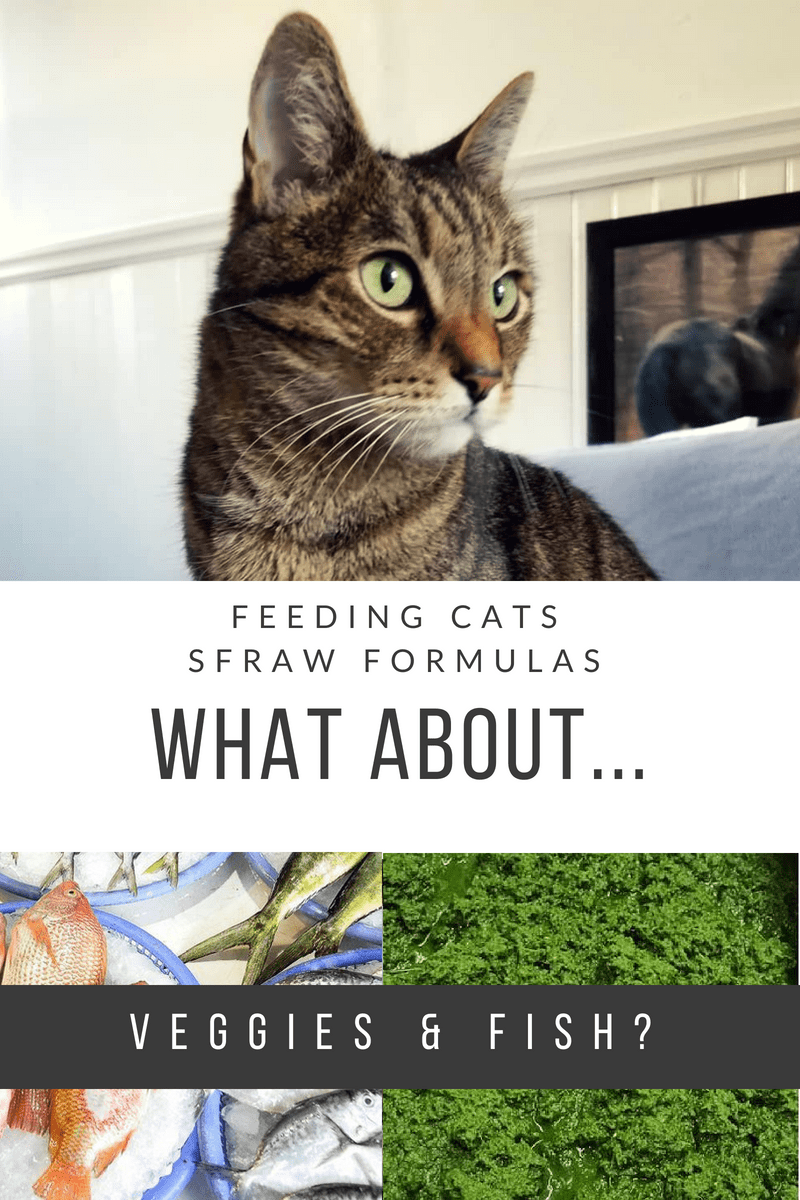
Our Formulas contain leafy greens, fennel, celery and other seasonal low-glycemic vegetables, ginger or garlic, nutritive and culinary herbs, pumpkin seeds, sunflower seeds, carob, spirulina, dulse, kelp, apple cider vinegar, red palm oil and a blend of superfruits for a whole food source of vitamin C. Most dogs, being facultative carnivores, find all of this pretty tasty and highly palatable, but some cats, being obligate carnivores, may not relish the flavor of these non-meat ingredients.
With cats in mind, I developed our Rabbit and Pheasant Formula to be seafood-free and with the addition of raw duck egg yolks & healthy pasture-raised fat — just be sure to include the aforementioned supplements when feeding the Grinds long-term or exclusively.
However, if your cat readily consumes and enjoys the Formulas as much as your dog does, the nutritional balance would be safe for a cat.
I’d certainly never force Formula on any feline friend though — there are other foods specifically made for their unique preferences. For example, feeding our Grinds is a wonderful choice for cats!
If your feline has ever suffered with any FUS or urinary issues, I would not feed our Formulas because our Formulas include seafood/fish (exception: Rabbit & Pheasant Formulas are seafood-free) Cats prone to these types of conditions or imbalances should not be fed fish or seafood IMO.
In conclusion…
If you are not feeding your cats whole prey or prey model/frankenprey meals (we promote these styles of feeding fresh foods as the ultimate/ideal, if you and your cats do well with this option), and prefer a prepared ground food, and your cat does not LOVE the SFRAW Formulas, THAT’s OK! Simply choose the SFRAW Grinds + a few added supplements and you’ll be providing them with everything that they need for long-term health.
We also endorse a few other products including: Hare-Today (fed in rotation/variety over time) and RAWR cat foods. RAWR is a prepared raw food that meets the unique nutritional needs for felines, and has a pate-like consistency and texture some cats prefer.
It’s okay to feed them all, too! For the most successful long-term outcome, we think that it is absolutely critical to completely avoid any/all processed dry or canned foods and treats – but you can choose a nice variety when it comes to fresh food feeding. For example, choose to feed some prey model, some Grinds and, if they like them, to include some Formula, too! Provide what works best for your kitties – the evidence will be clear in their obviously vibrant good health, normal appetite and efficient/stable digestion (or lack of it). Variety is a critical aspect of successful and responsible fresh food feeding – every protein and fresh food ingredient will provide a unique nutritional profile. Mixing and matching these fresh food options is a wonderful way to provide the most ideal nutritional balance for your feline.